



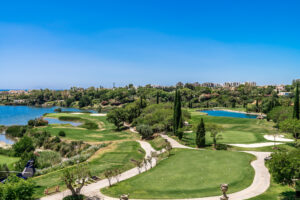
A serious search for benahavis golf property for sale usually starts with one question: which golf setting actually fits the way you plan to use the property? In Benahavís, that matters more than buyers often expect. Two homes can sit minutes apart yet offer very different access, privacy, views, community style, and long-term resale appeal.
Benahavís is one of the Costa del Sol’s strongest golf-led residential markets because it combines resort infrastructure with a broad housing mix. Buyers can target frontline golf apartments, gated townhouses, contemporary villas, and larger estates within established golf communities. For lifestyle purchasers, that means choice without leaving the premium segment. For investors, it means a more segmented market where micro-location and product type make a measurable difference.
Why Benahavís remains a prime golf market
Benahavís occupies a particularly favorable position between Marbella, Nueva Andalucía, Estepona, and the coast, while retaining a more private residential character. This balance is a large part of its appeal. Buyers get access to golf, security, mountain scenery, and a short drive to beaches, dining, and international schools, without relying on a dense urban setting.
The golf property market here also benefits from a strong mix of primary and secondary demand. Some buyers want a second home near championship courses and resort amenities. Others are relocating for longer stays and value gated communities, road access, and lower density. There is also a recurring pool of buyers focused on seasonal rental demand, particularly for well-presented apartments and villas close to golf, leisure facilities, and coastal hotspots.
That breadth supports market resilience. Not every segment performs the same way, but Benahavís is not dependent on a single buyer profile.
Benahavis golf property for sale by area
Not all golf addresses in Benahavís serve the same brief. Some are firmly resort-oriented, while others lean toward private family living or ultra-prime villa ownership.
La Quinta
La Quinta is often one of the first areas buyers review, and for good reason. It offers a mature residential environment, golf access, a mix of apartments, townhouses, and villas, and reliable connections to Nueva Andalucía, San Pedro, and Marbella. Buyers who want a practical luxury location often find La Quinta compelling because it works equally well for holidays, part-time living, and year-round use.
Pricing here varies widely based on view, renovation level, and exact sub-community. Frontline golf and open sea-view units command a premium, but there is still meaningful range compared with more tightly constrained prime enclaves.
Los Arqueros
Los Arqueros tends to attract buyers looking for a well-known golf community with strong value relative to surrounding luxury markets. It has a broad stock profile and a clear identity as a golf residential area. Apartments and townhouses can be especially attractive for buyers prioritizing manageable maintenance and rental usability.
For investors, Los Arqueros can make sense where purchase pricing stays aligned with realistic rental income expectations. For pure lifestyle buyers, the appeal is often the combination of security, views, and straightforward access to both golf and the coast.
El Madroñal and La Zagaleta-adjacent zones
These areas are a different proposition. The buyer here is typically not searching for a lock-and-leave apartment or a short-term yield play. The focus is privacy, scale, prestige, and estate-style living. Golf is part of the value equation, but so are security, land, architecture, and exclusivity.
This part of the market is thinner in volume and more bespoke in pricing. Comparable sales are less simple, and the premium attached to plot position, panoramic outlook, and architectural quality is substantial.
Marbella Club Golf Resort and similar resort settings
Resort-led communities appeal to buyers who want golf integrated into a controlled, high-spec environment. Villas in these settings often trade on more than square footage. The wider proposition includes community management, surrounding landscape quality, clubhouse access, security, and consistency of neighboring stock.
That consistency can help protect long-term desirability. The trade-off is that buyers may have less flexibility on immediate proximity to commercial centers or beaches compared with lower-elevation locations.
What property types are available
The phrase benahavis golf property for sale covers a wide range of assets, and buyers should be careful not to treat the category as one market.
Apartments generally appeal to second-home owners and investors seeking easier maintenance and better entry pricing. The strongest units are usually those with large terraces, open views, updated interiors, and a clear connection to golf or resort amenities. Ground-floor units with private gardens can perform well, though privacy and orientation need close review.
Townhouses sit in the middle of the market. They can provide more interior space than apartments, often with multiple terraces or small private gardens, while remaining easier to manage than a detached villa. For families or longer-stay owners, that balance can be useful.
Villas are the broadest category in pricing and specification. A villa near golf can mean a compact contemporary home in a gated community or a large custom-built property on an elevated plot. Frontline golf positioning adds appeal, but not automatically. Some buyers value direct golf frontage; others prefer a slightly removed position with wider views and more privacy.
How pricing works in Benahavís golf communities
Pricing is driven by more than bedroom count. In this market, buyers should expect value to move according to exact community, outlook, modernity, security level, and ease of access.
A renovated apartment with open golf and sea views may outperform a larger but dated unit in the same development. Likewise, a villa with strong indoor-outdoor design, privacy, and a usable flat plot can command more interest than a larger home with compromised layout or limited natural light.
Newer and fully updated properties generally attract stronger demand because many international buyers want immediate usability. That does not mean resales lack opportunity. In some cases, a well-bought resale in a prime community offers better long-term upside, especially where cosmetic upgrades can materially improve positioning.
Buying for lifestyle, investment, or both
This is where search criteria need to become more precise. A lifestyle buyer may prioritize terrace depth, sun orientation, quiet surroundings, and proximity to preferred clubs. A rental-focused investor may place greater weight on occupancy periods, maintenance costs, and broad tenant appeal.
Those goals overlap, but not perfectly. Ultra-specific homes can be excellent for personal use and less flexible for rentals. Conversely, a highly rentable apartment may feel less distinctive as a private retreat.
In Benahavís, hybrid purchases are common. Buyers want a property they can enjoy personally while retaining resale strength and seasonal rental potential. The best candidates tend to be in recognized golf communities, with practical layouts, strong outdoor space, and a location that works beyond golf alone.
What to check before making an offer
A polished presentation should never replace technical review. In golf communities, buyers should check community fees, maintenance standards, parking, storage, and any limitations affecting renovations or rentals. For villas, plot configuration, retaining walls, drainage, road access, and neighboring build potential also deserve attention.
Orientation is especially important. Morning sun, afternoon sun, wind exposure, and summer heat can affect how a terrace or pool area is actually used. Views matter, but usable outdoor living often matters more in daily ownership.
It is also worth assessing whether the property sits in a community with enduring market recognition. Well-positioned golf addresses in Benahavís tend to remain liquid because buyers know the name, understand the setting, and can compare stock more confidently. That matters at resale.
For purchasers comparing multiple parts of the Costa del Sol, working with a market-specific brokerage such as Valdemar Real Estate can help narrow the search by micro-location, property type, and purchase objective rather than just headline price.
Who should buy in this segment
Benahavís golf property is not only for golfers. That may sound obvious, but it changes the buyer pool in a helpful way. Many purchasers choose these communities for greenery, lower density, security, and views rather than for weekly tee times.
That broader appeal strengthens the category. If you want a lock-and-leave apartment with resort character, a family townhouse near Marbella, or a villa with privacy and golf access, Benahavís offers credible options across each of those use cases. The right purchase comes down to matching the property to your actual ownership plan, not just the golf label.
The best buying decisions here usually come from narrowing the search with discipline: define the area first, then the property type, then the combination of lifestyle fit and resale logic. In Benahavís, that approach tends to produce better assets and fewer compromises.